
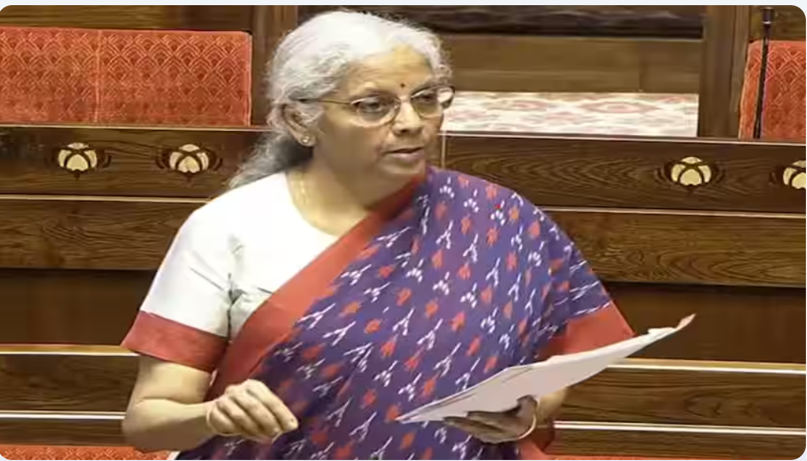

Finance Bill 2026 passed in Lok Sabha with 32 amendments.
The Lok Sabha on Wednesday, March 25, cleared the Finance Bill 2026, approving 32 government amendments and completing its part of the Union Budget 2026–27 process. Finance Minister Nirmala Sitharaman used the debate to underline a reform-led approach focused on growth, easier business rules and relief for taxpayers.
Key numbers at a glance
The Budget outlines a plan that aims to balance spending with fiscal discipline. The headline figures are:
- Total expenditure: Rs 53.47 lakh crore (up 7.7 per cent)
- Capital expenditure: Rs 12.2 lakh crore
- Gross tax revenue: Rs 44.04 lakh crore
- Gross borrowing: Rs 17.2 lakh crore
- Fiscal deficit: 4.3 per cent of GDP (slightly lower than 4.4 per cent this year)
The numbers show the government wants to keep investing in infrastructure while gradually tightening its fiscal position.
Focus areas: MSMEs, farmers, taxpayers
A significant part of the Finance Bill centres on supporting the backbone of the economy.
MSMEs and agriculture:
The government has proposed steps to ease compliance and improve access to funds for small businesses, farmers and cooperatives – sectors that play a major role in jobs and production.
Taxpayer relief:
Efforts are being made to simplify the tax system, reduce disputes and make processes more transparent.
Ease of doing business:
The Bill also aims to cut down on excessive licences and compliance requirements, especially for legitimate businesses.
Push for trade, manufacturing and strategic sectors
The government is also looking to strengthen India’s position as a global manufacturing and trade hub.
Key measures include:
- Simplifying customs processes
- Support for electronics, digital infrastructure, marine and leather sectors
- Focus on critical minerals and nuclear energy
The idea is to boost exports, attract investment and expand domestic manufacturing capacity.
Fiscal strategy: Growth with discipline
The fiscal strategy reflects a balancing act. Higher capital spending – pegged at Rs 12.2 lakh crore shows continued focus on infrastructure and long-term growth. At the same time, the fiscal deficit target of 4.3 per cent signals a gradual move towards tighter finances.